
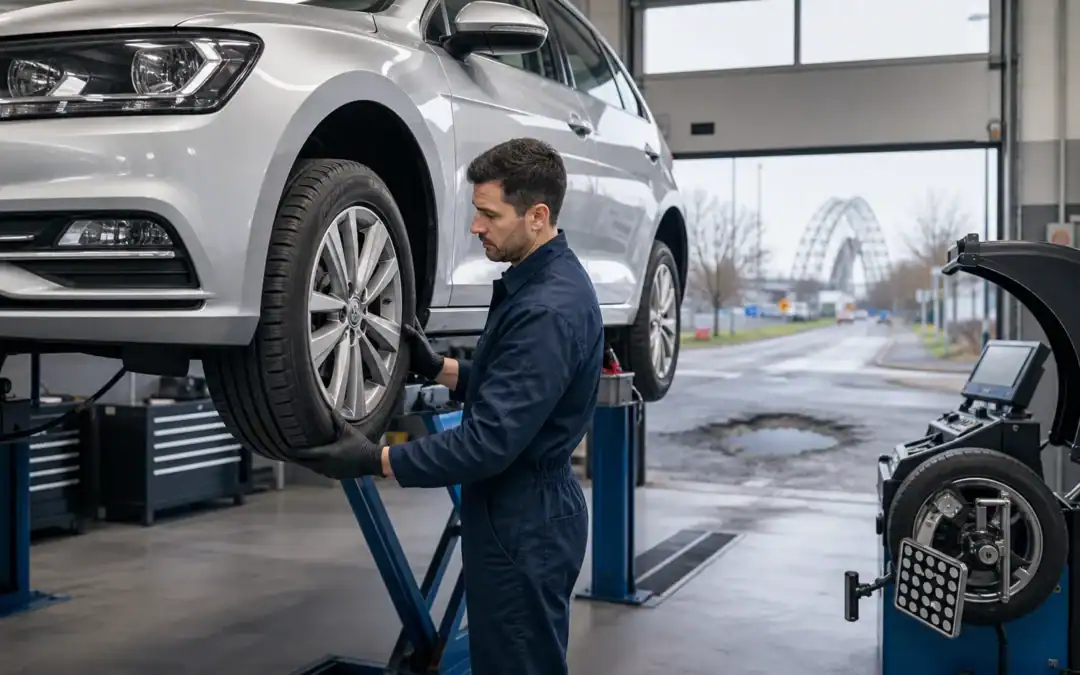
Stop Autumn Road Damage Before It Costs More
A sudden jolt, steering wheel shake or car that starts pulling to one side deserves attention, especially when wet autumn roads make damage harder to spot. In Telford, standing water can hide potholes until the last moment, while lower light and slippery surfaces leave less room to react safely.
Pothole damage and wheel imbalance can feel similar from the driver’s seat, but they do not always need the same repair. A vibration after an impact may involve the tyre, alloy wheel, alignment or suspension, while an imbalance can develop when a wheel weight is lost or tyre wear changes. For a proper VW repair in Telford, we look beyond the obvious symptom to find what is actually affecting the vehicle.
Our technicians work with Volkswagen Group vehicles every day, including Volkswagen, Audi, Skoda, SEAT and Cupra models. That experience helps us assess the full picture rather than assuming every shake is a simple balancing problem. We serve drivers across Telford, Shropshire and the West Midlands.
Spot the Difference Between Impact and Imbalance
Pothole damage often makes itself known at the moment it happens. You may feel a sharp thud through the cabin, hear an unfamiliar noise or notice that the steering feels different straight afterwards. Even a pothole that seems fairly small can create a hard impact when the road is wet or the tyre drops into it at speed.
Signs that can point towards pothole damage include:
- A tyre pressure warning or a gradual loss of pressure
- A visible cut, bulge or damage to the tyre sidewall
- Scuffs, bends or cracks on an alloy wheel
- New pulling, vibration or an off-centre steering wheel
- A change in handling after a clear impact
A sidewall bulge, cut or loss of tyre pressure is a safety concern. We recommend having it checked promptly rather than relying on the tyre to hold up through more journeys.
Wheel imbalance usually creates a more speed-related vibration. Many drivers notice it most through the steering wheel during faster road driving, often within a particular speed range. The shake may become less clear when you slow down or speed up further, which can make it tempting to ignore.
Still, symptoms alone cannot confirm the cause. A pothole can knock off a balancing weight, bend the wheel, disturb alignment or put strain on parts around the wheel. It is also possible to have more than one issue at once. An informed inspection helps avoid unnecessary wear to tyres, wheels and suspension parts.
What Our VW Repair Checks Cover
The first step is a careful visual inspection. We assess the tyres for punctures, cuts, bulges, sidewall damage and uneven wear, then inspect the alloy wheels for signs of impact, distortion or cracking. This lets us identify obvious concerns before carrying out further checks.
When vibration is the main complaint, wheel balancing and alignment are both worth considering, but they are different jobs. Wheel balancing checks whether the wheel and tyre assembly rotates evenly. If it does not, the wheel can create a vibration that becomes more noticeable at certain speeds.
Wheel alignment checks whether the wheels are set correctly in relation to the vehicle and the road. Incorrect alignment may cause pulling, an off-centre steering wheel and faster tyre wear. It can develop over time, but a strong pothole strike can also affect it.
Depending on what we find, a wider mechanical assessment may be needed. A significant impact can place stress on steering and suspension components, which can affect how the vehicle handles. We may check for wear, damage or unwanted movement in relevant parts, particularly where the symptoms do not match a straightforward wheel issue.
Dashboard warnings after an impact also deserve proper attention. Volkswagen, Audi, Skoda, SEAT and Cupra vehicles can benefit from brand-specific knowledge and suitable diagnostic processes, rather than guesswork based on one warning light or one driving symptom.
Protect Your VW Through the Autumn Pothole Season
Avoiding every pothole is not realistic, but a few calm driving habits can lower the chance of a hard strike. Wet weather calls for more space, more time and less sudden steering.
We recommend keeping these points in mind:
- Leave a safe gap from the vehicle ahead, so damaged road surfaces are easier to see
- Slow down appropriately around standing water, as puddles can conceal deep potholes
- Avoid driving through deep water where it is safe to do so
- Check tyre pressures regularly using your vehicle manufacturer’s guidance
- Pay attention to fresh vibration, steering changes and tyre pressure warnings
Correct tyre pressures support predictable handling and help tyres cope better with everyday road impacts. Underinflated tyres can be more prone to sidewall damage, while incorrect pressures can also affect tyre wear and the way the car feels on the road.
It is worth acting early if something feels different. A minor shake can become more irritating, tyre wear can become uneven, and a small wheel issue may lead to greater strain elsewhere. The sooner the cause is identified, the clearer the repair decision will be.
Understand What Vibration Can Mean
After a heavy pothole strike, do not assume that the vehicle is fine just because it continues to drive. Equally, do not assume that every steering wheel vibration is only a balancing issue. The cause may relate to the tyre, wheel, balance, alignment, steering or suspension.
Pay particular attention to a car that pulls to one side, develops steering wheel shake, shows a tyre pressure warning or has visible tyre and wheel damage. Recognising these signs helps drivers understand how autumn road conditions can affect vehicle handling, tyre wear and overall safety.
Restore Confidence In Your Volkswagen
At Supreme Automotive, we carry out thorough checks to identify the cause of handling or wheel concerns and recommend the right next steps. Book VW repair in Telford with our experienced team for careful, vehicle-specific attention. To arrange an inspection, contact us today.